
Published: May 8, 2026
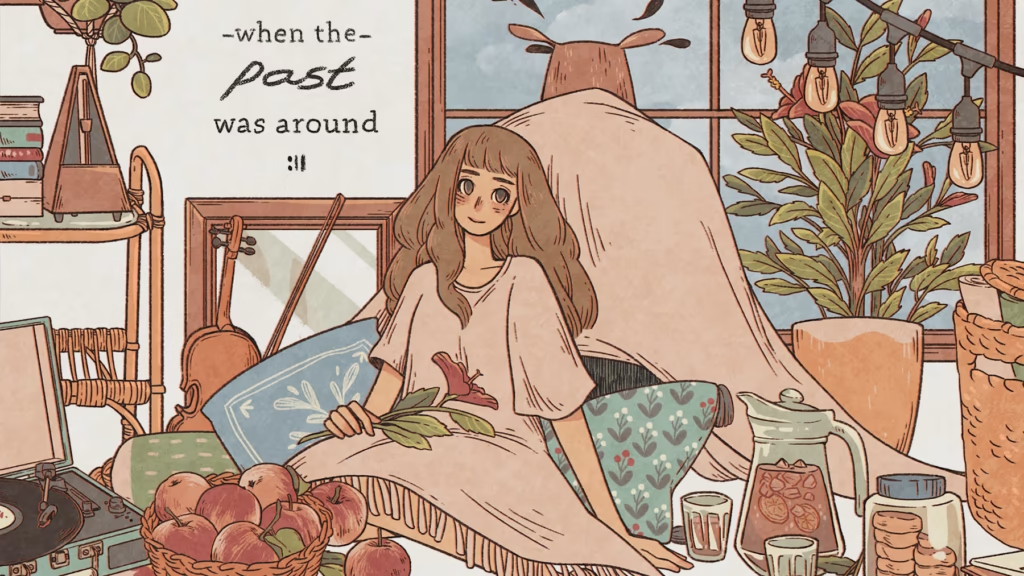
| Mojiken Studio (Developer) | Toge Productions (Publisher) Where to play: PC/Console (Steam, Itch.io, Switch, PlayStation, Xbox) | Mobile (Android, iOS) |
| Trigger warning for sensitive topics: death of a loved one. |
Jump to:
A Story of Love, Loss, and Moving On
Although there’s absolutely no dialogue in When The Past Was Around, this emotional point-and-click game does an excellent job walking players through the main stages of a relationship—from meeting, to getting to know each other, to falling in love, and everything leading up to the end. In just five wordless chapters, it builds a satisfying romantic arc that makes you genuinely feel for the main character, whose name we know is Eda due to the official description and some visual context clues within the game.
There’s Beauty in Silence
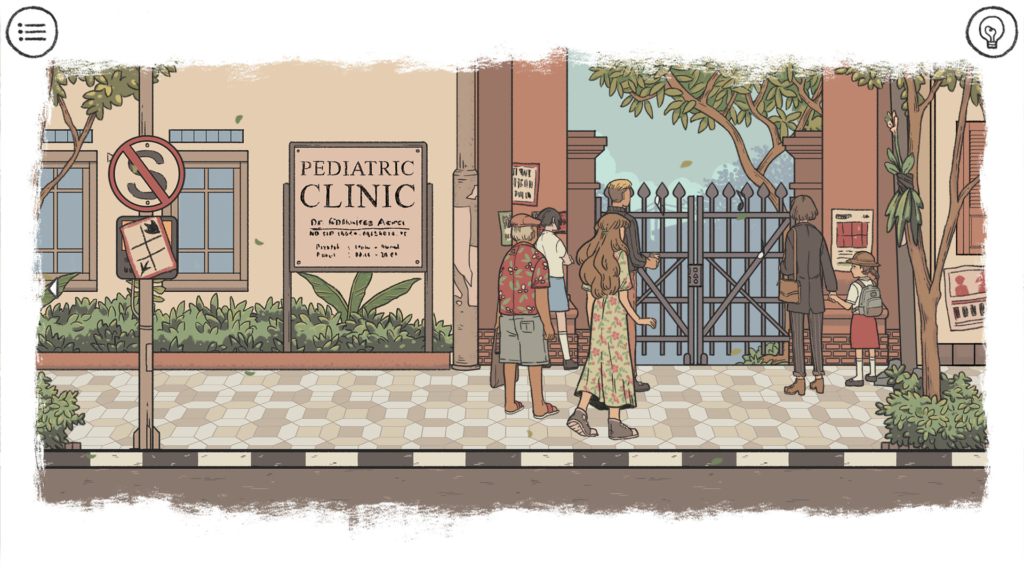
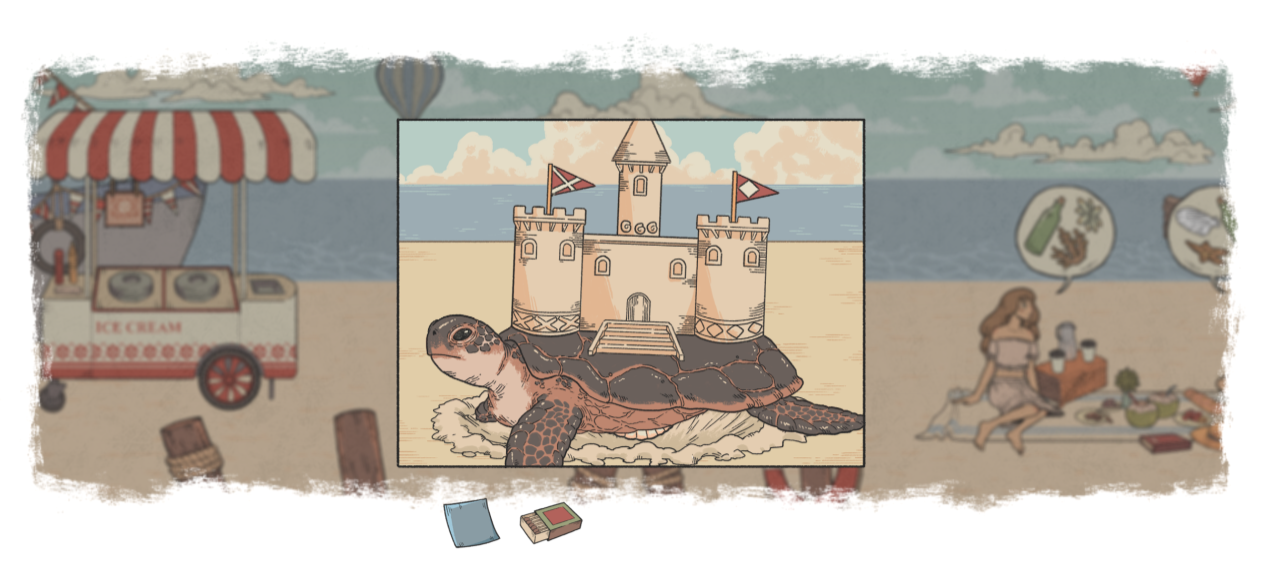
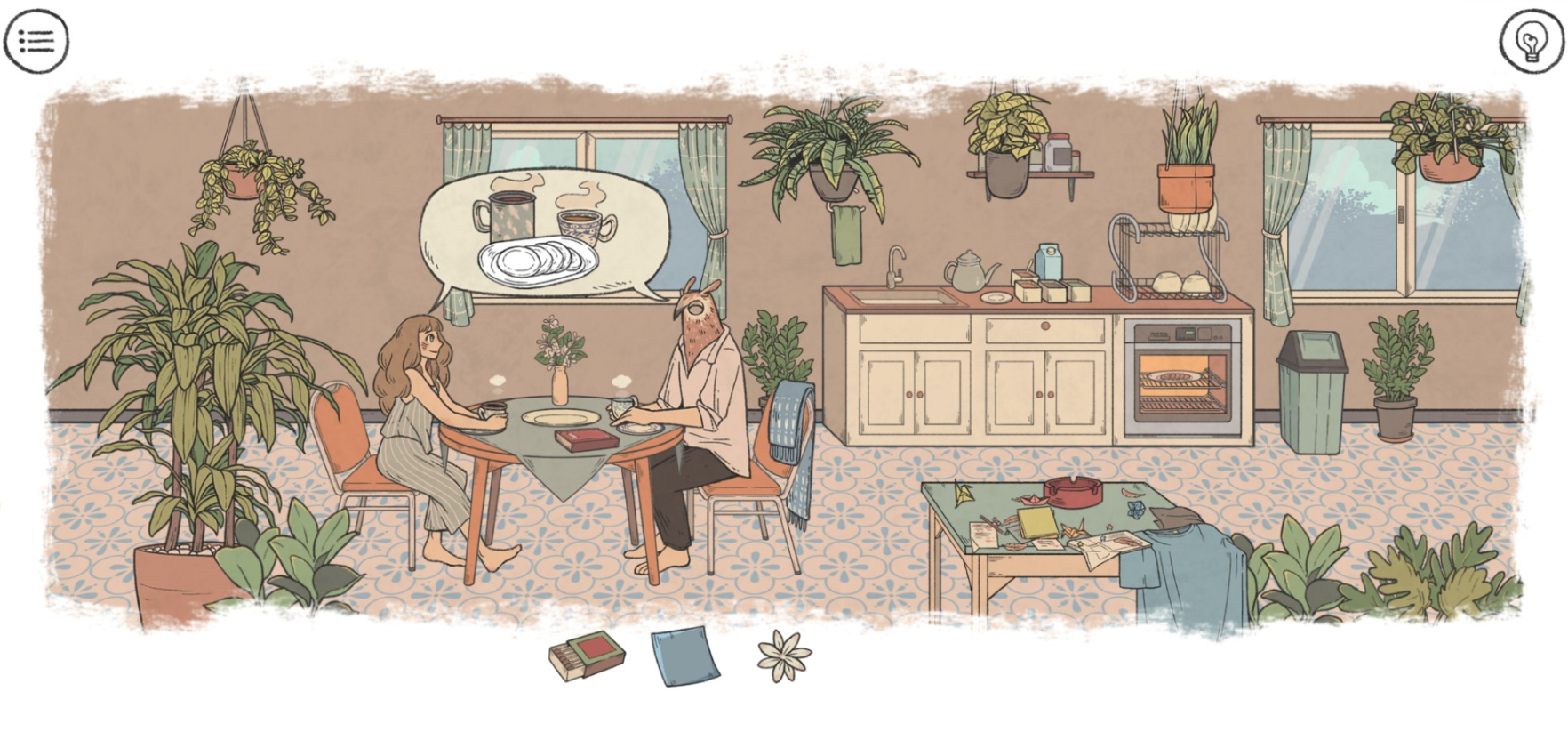
When The Past Was Around is made up of beautiful illustrations and everything is in the details. It’s a point-and-click game where you need to look very closely at each scene to piece together clues and solve puzzles. Because of this, I felt the lack of dialogue benefited the atmosphere of the game and forced me to pay more attention to the visuals not just to solve puzzles, but to understand the story.
The imagery is straight forward and emotionally evocative enough that nothing feels missing. I was still able to follow along and understand what was happening without difficulty. No dialogue also seems to make it easier to project your own emotions onto the characters. Due to the silence, you end up filling in certain blanks yourself, deciding how you want to interpret these characters and their connection to each other. If you’re like me, you may even discover waysWhen The Past Was Around relates to your own life.

The Art of Observation
The puzzles can be pretty challenging at times, though I’ll admit that puzzle-solving isn’t usually my strong suit. There are moments where I thought I’d run into a glitch but really, I just needed to look more closely to spot a key detail. I saw many posts online of people discussing potential glitches in this game, and some of them may be legitimate. But I’m sure there are others who, like me, were convinced they had tried everything and couldn’t progress, only to realize they were really just overlooking a key piece of information.
As I said before, everything about When The Past Was Around is in the small details. Many times, I had to squint or look very closely at my screen to finally clue in on something. I thought I was going crazy during Chapter 2 when I couldn’t figure out how to get the final item I needed. I was running back and forth between rooms, convinced it was a glitch, only to suddenly spot this tiny object I’d apparently been overlooking for the past 10 minutes. The item was in plain view but very, very small.
Gameplay Critiques
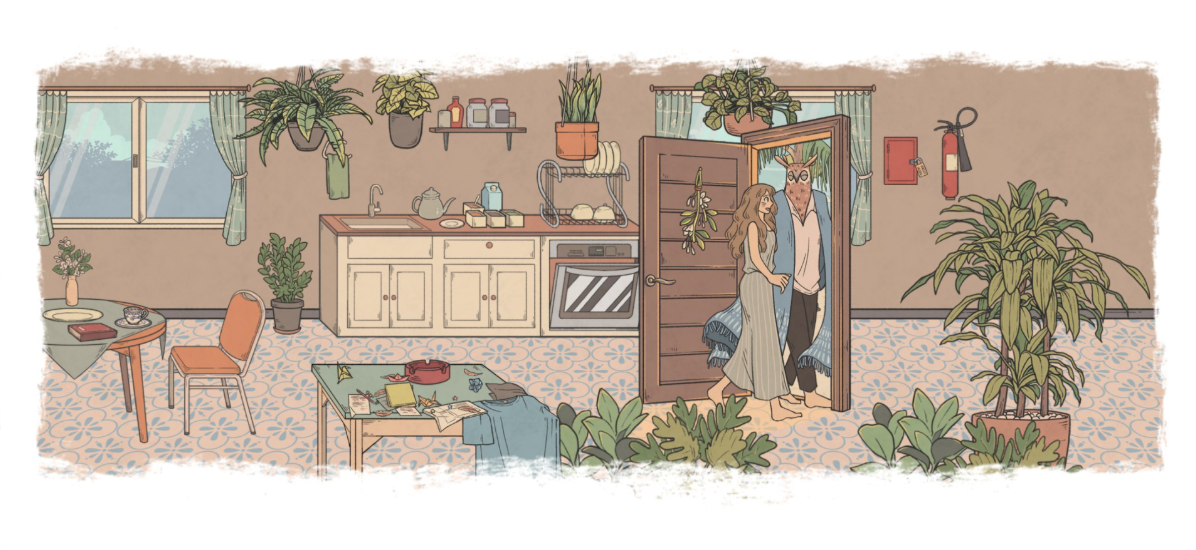
Sometimes, the game’s internal logic doesn’t quite make sense. For example, at one point, it seems like Eda needs to find a key to unlock her apartment from the inside. I acknowledge that realism isn’t exactly the point here, considering there are also times Eda travels through a floating door that appears out of nowhere.
Maybe that particular puzzle is supposed to represent Eda being trapped in her own mind? I don’t know. I’ll admit, there could be some metaphorical meaning behind these details I’m not picking up on. But when I was playing the game, puzzles like this felt a bit confusing and disconnected from the story.
Why does Eda need to find a key to unlock the inside of her own apartment? And why does her partner’s super important life-saving medication keep getting lost? She has to haphazardly search for it like three times! I personally enjoyed it more when the puzzles complemented the narrative, like collecting mementos together or washing Eda’s partner’s scarf.
More Than Just Clicking Around
I saw someone describe this game as “basically just clicking around until you find what you need.” I want to acknowledge this criticism, because it’s one I feel applies mostly to the first chapter. As you progress, there is plenty of challenging puzzle-solving involved. You really have to use your brain, because mindless clicking will only get you so far in When The Past Was Around.
That said, lots of pointing and clicking is simply the nature of point-and-click games (I know, I know. Thank you, Captain Obvious.) But I want to drive that point home because if you simply don’t enjoy that genre, When The Past Was Around probably isn’t for you. Though I have to say, as far as point-and-clicks go, this game has plenty going for it that sets it apart from others. It has an evocative story and puzzles that challenge you to look closely and recall details, to connect dots and experiment with the possibilities, to dig deep and think. In short, When The Past Was Around really got the little hamster wheel in my brain turning. And I thank it greatly for that!
Better on PC & Console than on Mobile
The music didn’t seem to work on my phone, which sucked because that’s an important aspect of this game. I’m not sure what happened, but I couldn’t get any of the audio to work. I went into settings to make sure the volume was all the way up, and I tried deleting and redownloading the app—still nothing. I also opened other games and apps on my phone. Audio seemed to work for everything other than this, so I’m not sure what gives.
I ended up playing When The Past Was Around on both my phone and computer, because I wanted to experience it with music. Thankfully, the sound worked perfectly fine on the PC. I’ll explain why this is such a win in the next section.
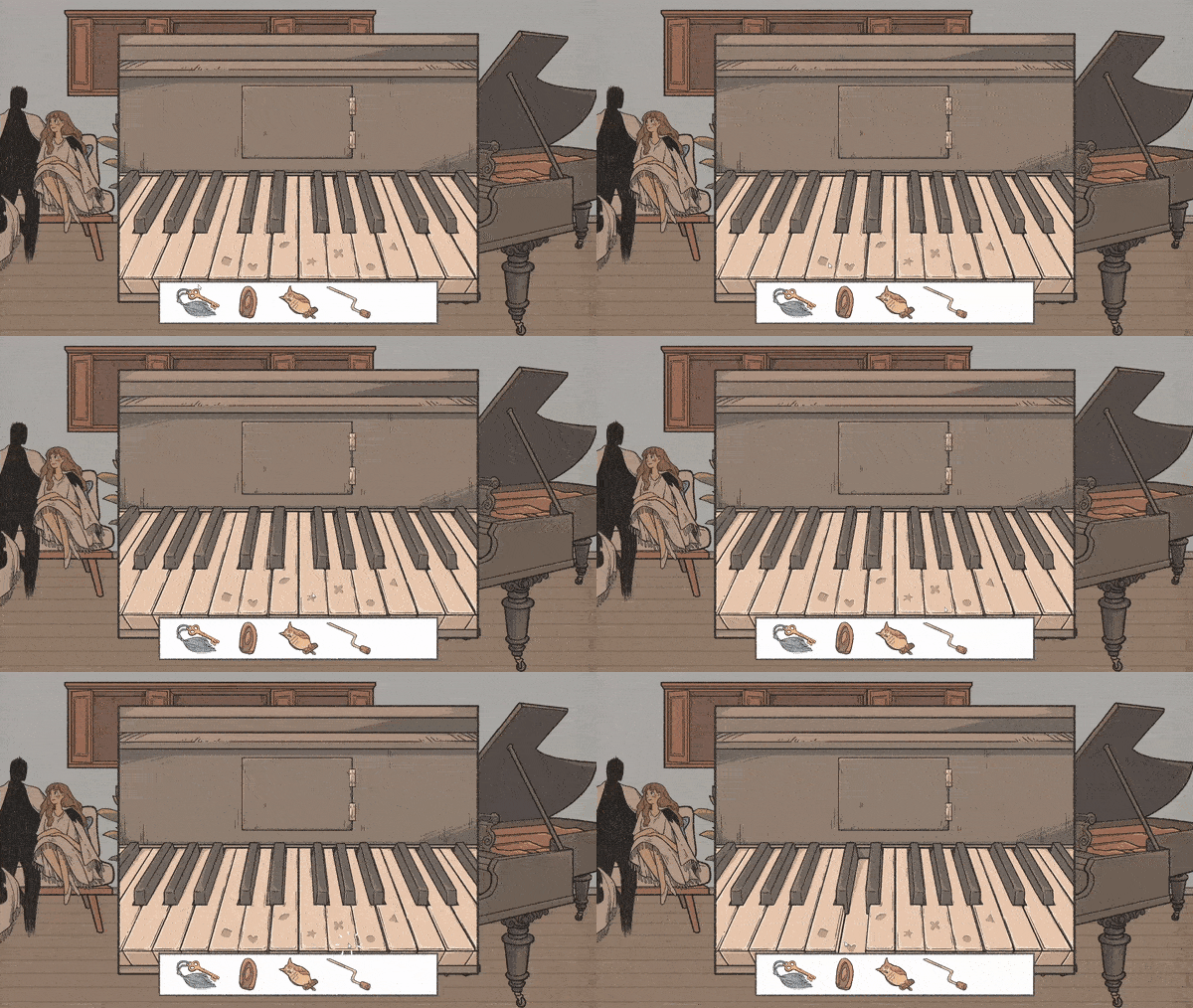
On my iPhone, when I would try to grab and drag an item from the bottom of the screen, I would often accidentally swipe up on the whole screen tab. This happened over and over again and was pretty annoying, which is another reason I preferred playing When The Past Was Around on PC.
When The Past Was Around Soundtrack
The soundtrack of When The Past Was Around perfectly matches the game’s premise, a love story between two musicians. Our main characters bond over music and both play the violin, an instrument that is prominently featured on the soundtrack, which was was composed by Masdito “ittou” Bachtiar, Mojiken Studio’s in-house composer. Bachtiar also worked on A Space for the Unbound, Mojiken Studio’s other cozy game with a highly praised score.
Each song seemed to evoke a sense of idyllic nostalgia. They were delicate and airy, sort of like Studio Ghibli music, with lots of piano and strings. It’s hard to choose a favorite track from When The Past Was Around, because they’re all so strong. But one of my tops is When The Day Arrived, the titular song of Chapter 4. It honestly makes great studying or reading music, and I’ve since downloaded the soundtrack on Spotify, but you can also listen to all the music on YouTube.
Out of the two problems I encountered on mobile, not being able to get audio to work was the worst. Considering how fantastic and important the music is to the overall experience, playing without audio isn’t really an option. Do yourself a solid favor and play When The Past Was Around with headphones or at least with the volume up.

TLDR / Final Thoughts
The prologue for When The Past Was Around is free to play, while the full story costs $1.99 on mobile, $7.99 on Steam, and $8.49 for Switch, PS4, and Xbox One at the time of this review. Even though the PC and console versions are more expensive, I recommend playing on these rather than mobile due to the audio and swiping issues I mentioned above.
This is a quiet, bittersweet game that asks players to reflect on themes of grief and whether happiness can exist alongside it. My favorite cozy titles tend to be games that tackle mature, emotional themes with care and finesse, and When The Past Was Around does exactly that.
If you’ve experienced the loss of a loved one, or if you’re just someone with a sentimental heart, parts of this game might be difficult to get through—but I think it’s worth it. I found myself confronting aspects of my own grief in a gentle setting alongside the main character. Although I personally felt When The Past Was Around was worth a playthrough, if you’re not in the right headspace to explore these themes, it may be better to wait and come back to it when you feel ready.

All screenshots captured by Cozy Mode Gaming unless otherwise noted.