Published: May 10, 2026

Cute creatures engage in a chaotic free-for-all-brawl using magic spells.
I laughed, I shouted, I celebrated when my plans unfolded accordingly, and I cringed in pain when things didn’t go my way, like running out of counter spells while another player pummels me into the ground. Casting Shadows is a competitive, arena‑style combat game that makes you feel a lot of emotions, and its so much fun to play.
Casting Shadows involves a good amount of strategy, since players must constantly make decisions about which cards to collect, where to move on the map, when to attack, and when to protect against damage. Each turn gives you a limited number of actions and resources, forcing you to always think several steps ahead about how to spend them. This is my favorite part of Casting Shadows, since I enjoy weighing the many possibilities in my head then seeing how my decisions affect the way the match plays out.
Battle‑focused Gameplay
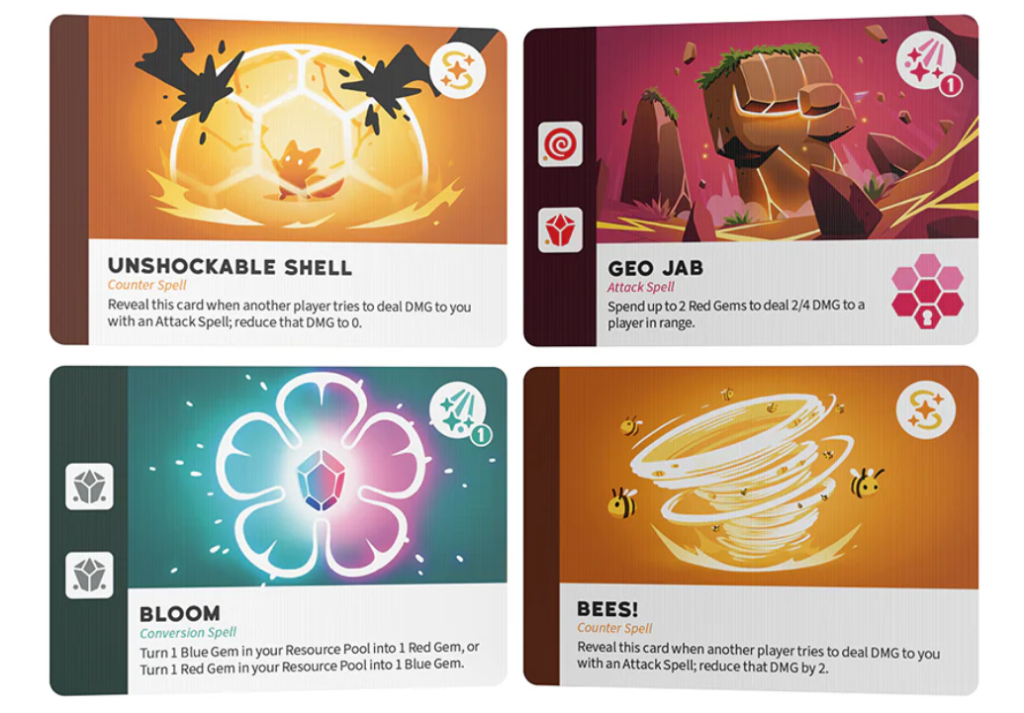
The main goal of Casting Shadows is to outlast all other players by fighting them and reducing their HP to zero. The combat zone is very small, consisting of only seven areas (hex tiles) that you can jump to, and east poses its own benefits and challenges. For example, one tile may provide additional resources while another may be located in dangerous proximity to any opponent. This makes you think very carefully each time you travel.
At the start of the game, players choose their meeples (characters) and places the their token on the hex tile map. On their turn, players roll resource dice to determine what they have available to spend on actions and spells. Then they use four action points to travel, collect cards, cast spells, protect themselves, reroll dice, or refresh available cards. As players gather resources and spell cards, they can collect more powerful spells and eventually transform into their character’s Shadow Form which comes with special abilities.
Slight Learning Curve
Even though there is a decent amount of strategy to Casting Shadows, it remains relatively accessible to learn. The rulebook is straightforward and does a good job explaining the game, so I didn’t need to watch a video or seek out any additional sources when learning how to play. I’d say I had a good grasp on how everything worked by the middle of the first game.
That said, it can feel like a lot is happening at once in Casting Shadows, because there are so many pieces to keep track of. I played it with some folks who don’t have much experience with board games and, while they were eventually able to pick up the rules, they did need some assistance managing all the moving parts throughout the game.
As you play, you accumulate a larger and larger spellbook along with a companion to assist you in battle. On top of this, you must manage your health, shadow and action points, resources, character abilities, and the various effects of the hex tiles. To some players, this might feel overwhelming. To others (like me), all these moving parts adds a satisfying layer of depth and strategy.
Components
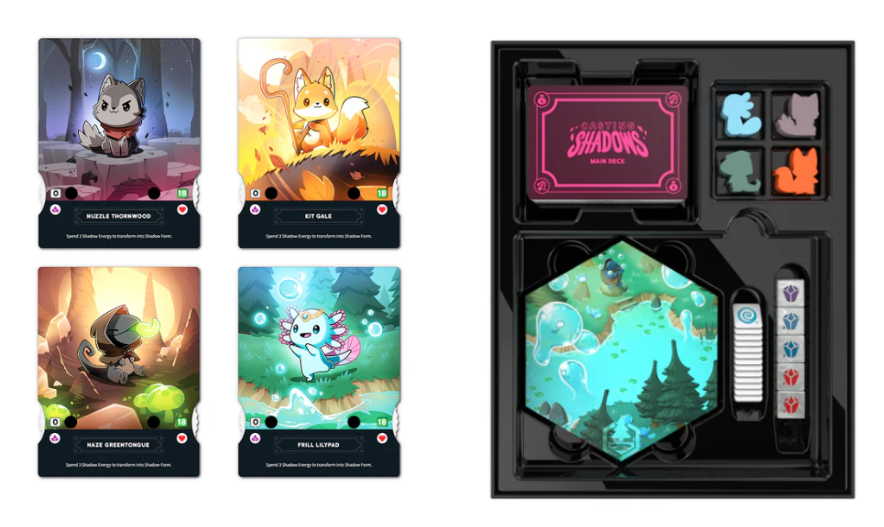
You get to choose one of four adorable animals to start out as, which each come with a player card, wooden token, and a designated space on the game board.
Once you gain enough Shadow Points, you get to transform into your character’s Shadow Form by flipping over the player card and reveling your new name, design, and ability. Each Shadow Form is slightly more intimidating than the original character, but still cute as heck. The player cards are sturdy, and the spinning wheels on each side that allows you to keep track of your HP and Shadow Points moves smoothly but stays in place for the most part.
The hex tiles that make up the game board are also sturdy and have the same bright, round, lovely artwork. But my main issue with the hex tile design is something my entire gaming group pointed out, and something I’ve seen mentioned by others online. Each tile comes with a specific effect, for example, don’t take damage or gain an extra resource. These effects are explained on the Hex Tile Reference Sheet, but it would be much more convenient if they were printed on the game tiles themselves.
I understand the decision to put this information in a reference book instead of on the game board itself probably has to do with visual design. However, including small icons to indicate each tile’s effect would have been a simple way for players to reference effects at a glance without compromising the board’s aesthetics.
2-4 Players
I played Casting Shadows with two people and with four. Though its still fun as a 2-player game, there is significantly less drama. When you do 2-player, the pacing becomes a bit more controlled and predictable, since there are fewer spells flying around and fewer people disrupting your plans. I still recommend it if you want a competitive 2-player game, but I suggest playing with 3-4 people whenever possible if you’re like me and enjoy the chaos of a free-for-all battle.
Final Thoughts / TLDR
There are a lot moving parts to keep track of, but that complexity is what makes Casting Shadows engaging and fun to strategize. It’s much easier to pick up if you already have experience with strategy board games, but it can be harder to juggle if you don’t. That said, I still think it could work as an introductory strategy game if you’re willing to spend a little extra time learning it or have someone at the table who can help guide new players.
I’m impressed with both the quality of the components and the richness of the gameplay, especially considering Casting Shadows is a $25 game that seems to pretty regularly be on sale for much less. I bought it online for only $17.50. I love having a strategy game in my collection that adds high-stakes drama to game night while still being accessible enough that the rules can be easily explained to new players.
Note on Indie Status: While Casting Shadows is an indie game funded entirely through Kickstarter, it comes from Unstable Games, the tabletop division of TeeTurtle. It features the high production value of a major studio while still being independently funded and developed.